Mozart's Fragmentary Oboe Concerto to Receive Historic Dresden Premiere This August
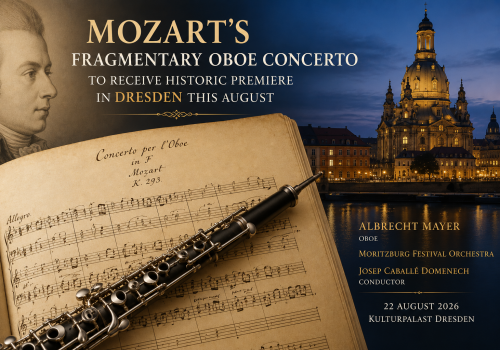
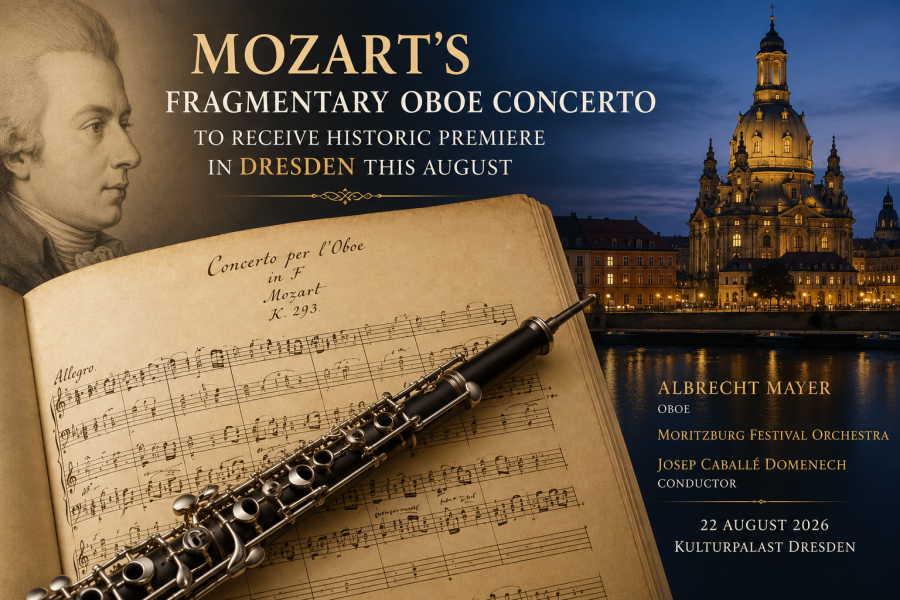
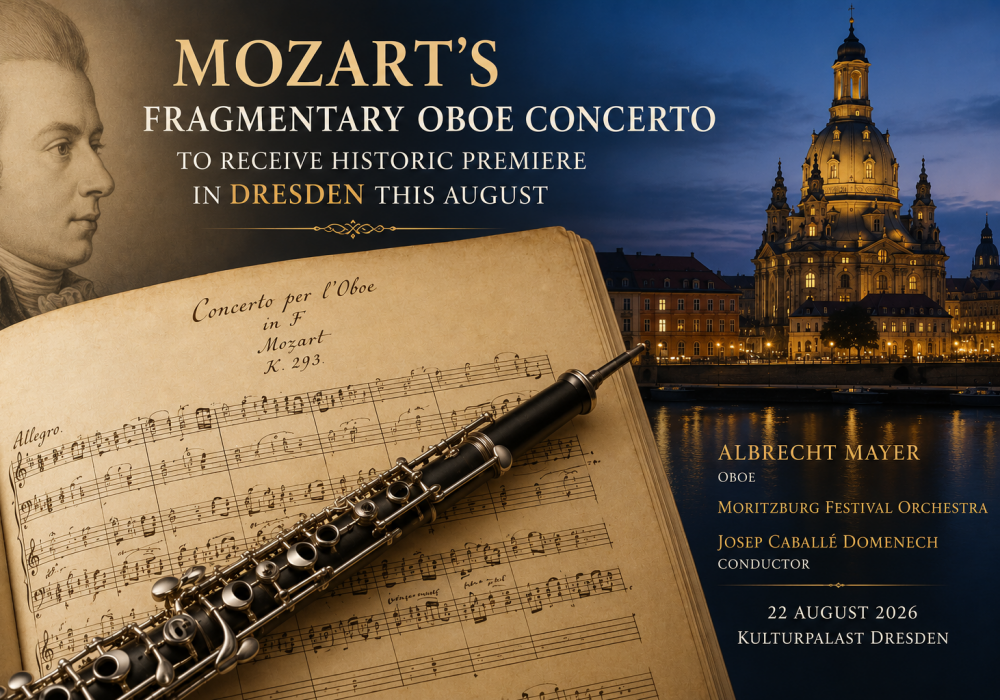
One of the most intriguing Mozart events of 2026 will take place this summer, as a long-unfinished work by Wolfgang Amadeus Mozart is set to receive its Dresden premiere at the Moritzburg Festival.
On 22 August, internationally acclaimed oboist *Albrecht Mayer* will perform Mozart's *Concerto for Oboe and Orchestra in F major, K.293, alongside the Moritzburg Festival Orchestra under the baton of **Josep Caballé Domenech*. The performance will take place at the Kulturpalast Dresden and marks the first presentation of a newly completed version of the work in the city.
The concerto has long fascinated Mozart scholars. Only a fragment of the first movement survived, leaving the work unfinished for more than two centuries. Swiss oboist and composer *Gotthard Odermatt* has now completed the score, carefully reconstructing the missing sections while remaining faithful to Mozart's compositional language. Rather than attempting to imitate Mozart indiscriminately, Odermatt sought to create a version that respects the surviving material and reflects the stylistic principles of the Classical period.
The premiere forms part of the renowned *Moritzburg Festival*, one of Germany's leading chamber music festivals. This year's Moritzburg Festival Orchestra brings together 41 outstanding young musicians from 18 countries, all selected through the festival's prestigious Academy programme. Since its founding in 2006, the Academy has become an important platform for emerging international artists, offering full scholarships to exceptionally talented performers from around the world.
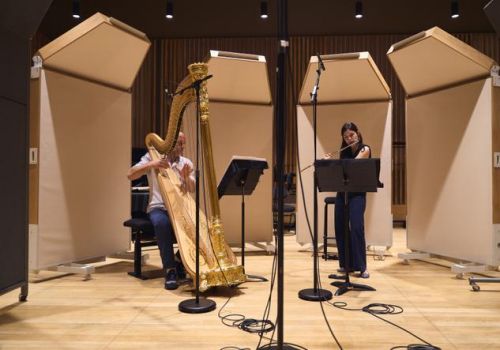
The performance comes at a remarkable moment for Mozart scholarship. Following the recent discovery of previously unknown flute and harp pieces in Paris, audiences now have another opportunity to experience music connected to Mozart's creative legacy in a new light. Although K.293 is not a newly discovered composition, its reconstruction allows listeners to imagine how another unfinished chapter of Mozart's output might have sounded had the composer been able to complete it himself.
For performers, scholars, and music lovers alike, the Dresden performance represents more than a concert. It is a rare opportunity to witness history, research, and artistic imagination come together in bringing an incomplete Mozart score back to the concert stage after more than two centuries.