Why Seven Small Pieces for Flute and Harp By Mozart Matter
At first glance, the recent discovery of seven short pieces for flute and harp in a previously unknown Mozart manuscript may not seem revolutionary. None of the works is a symphony, a concerto, or an opera. They are brief exercises, sketches, and teaching materials written during Mozart's stay in Paris in 1778. Yet for musicians and scholars, this discovery is far more significant than the modest scale of the compositions might suggest.
A Rare Addition to Mozart's Catalogue
Mozart's complete works have been studied, catalogued, performed, and recorded for more than two centuries. Unlike many other composers, very few genuinely new Mozart compositions come to light. Every authenticated manuscript therefore represents an important addition to our understanding of his creative world.
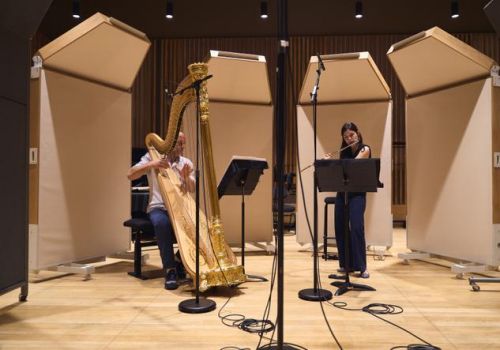
The newly discovered notebook contains seven previously unknown pieces for flute and harp, instruments that occupy a unique place in Mozart's output. In fact, he wrote remarkably little music for this combination.
Revisiting Mozart's Relationship with the Flute and Harp
The discovery is particularly fascinating because it relates to one of Mozart's most famous Parisian commissions: the Concerto for Flute and Harp in C major, K.299.
The notebook is believed to have been created during lessons Mozart gave to Marie-Louise-Philippine de Guînes, a talented young harpist and daughter of the Duc de Guînes, one of his important patrons in Paris. The manuscript therefore provides valuable context for understanding how Mozart approached both instruments and how he taught young musicians.
For flautists and harpists, the discovery expands a surprisingly small body of Mozart repertoire and offers new material directly connected to one of the most celebrated flute-and-harp works in classical music.
Mozart the Teacher
Perhaps the greatest importance of the manuscript lies not in the music itself, but in what it reveals about Mozart as an educator.
Most surviving documents portray Mozart as a composer, performer, or letter writer. Much less is known about his day-to-day work with students. The newly discovered notebook contains exercises, corrections, and unfinished passages that allow researchers to observe the learning process in real time.
For the first time, scholars can study how Mozart explained musical ideas, developed exercises, and guided a student's progress. In many respects, the manuscript functions as a classroom notebook preserved across nearly 250 years.
A Window into Paris, 1778
The year 1778 was one of the most difficult and transformative periods of Mozart's life. While seeking professional opportunities in Paris, he struggled financially, faced professional disappointments, and suffered the devastating loss of his mother.
Every surviving document from this period helps historians reconstruct a crucial chapter in his development. The newly discovered manuscript offers a rare glimpse into Mozart's daily activities outside the concert hall and beyond the major compositions for which the year is remembered.
Why Small Discoveries Can Be Big Discoveries
Not every important musical discovery changes the concert repertoire overnight. Sometimes a few pages of manuscript can reveal more than an unknown symphony.
These seven short pieces remind us that Mozart was not only a genius composer but also a working musician, a teacher, and a young man navigating the challenges of life in one of Europe's cultural capitals. They enrich our understanding of the person behind the masterpieces and demonstrate that even after centuries of research, Mozart still has stories left to tell.
That is why seven small pieces for flute and harp matter.